
Reporting: sourced factual coverage reviewed by the editorial desk.
Sui Foundation announced on November 19 that Hashi is live on mainnet, opening a route for Bitcoin holders to use a Bitcoin-backed asset as collateral on Sui. The foundation says Fluid lending is available with USDC borrowing, while Upshift vaults are also live.
The practical change is access to borrowing and other financial applications without first selling the underlying bitcoin. It is not the same as leaving bitcoin untouched in a personal wallet: the arrangement introduces a shared pool and a separate asset, hBTC, used on Sui.
Hashi’s technical documentation describes a deposit-and-redemption system. After a Bitcoin deposit is confirmed, an equivalent quantity of hBTC is issued on Sui. Redemption destroys that hBTC and initiates a Bitcoin transfer back to a specified address. Bitcoin remains on its original network; hBTC represents the pooled backing on the other ledger.
Control of that pool is the central design question. A committee drawn from Sui validators jointly signs Bitcoin transactions through threshold cryptography. A separate component, the Guardian, must also sign withdrawals from a cloud enclave. According to the documentation, committee approval alone cannot spend the deposited bitcoin.
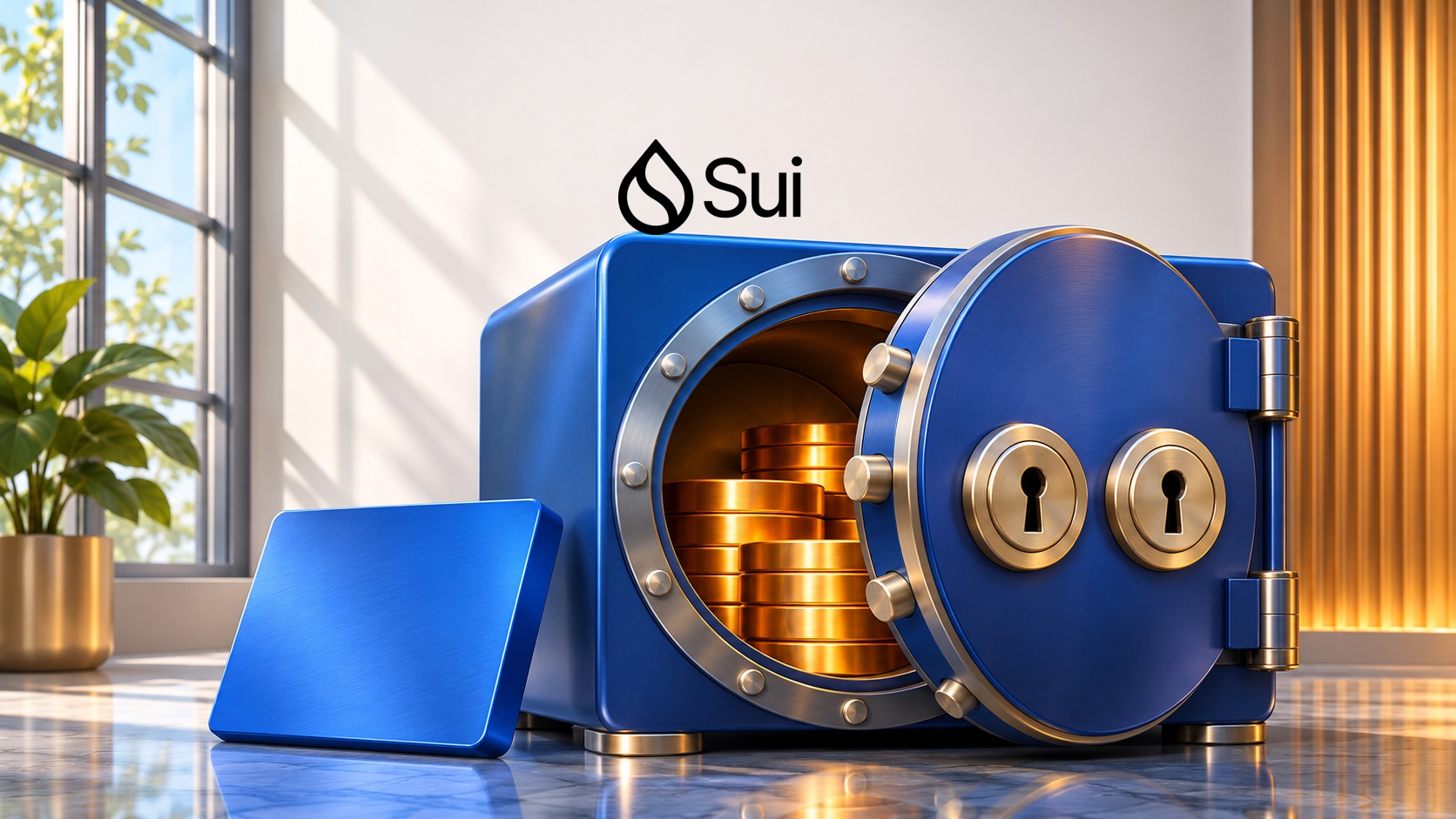
That arrangement explains the two locks in this report’s conceptual cover. It describes the intended authorization structure, not an independent security audit or a guarantee that either the protocol or a lending strategy cannot fail. RailsRecord did not conduct a deposit, loan or redemption test.
The launch announcement combines current products with future work. Sui places Ember vaults later in the year, BitGo participation in 2027, and additional settlement integrations in early 2027. Those plans should not be counted as services already delivered.
A list of ecosystem participants is also different from a measurement of customer use. The announcement does not establish how many borrowers have completed loans through the new route or how reliably withdrawals perform under stress.
One further distinction matters for readers encountering promotions: the canonical documentation says Hashi creates hBTC only. It does not issue a separate HASHI governance, utility or airdrop token.
Join the conversation
Share your perspective and reply to other readers in Community.
Discuss this article →